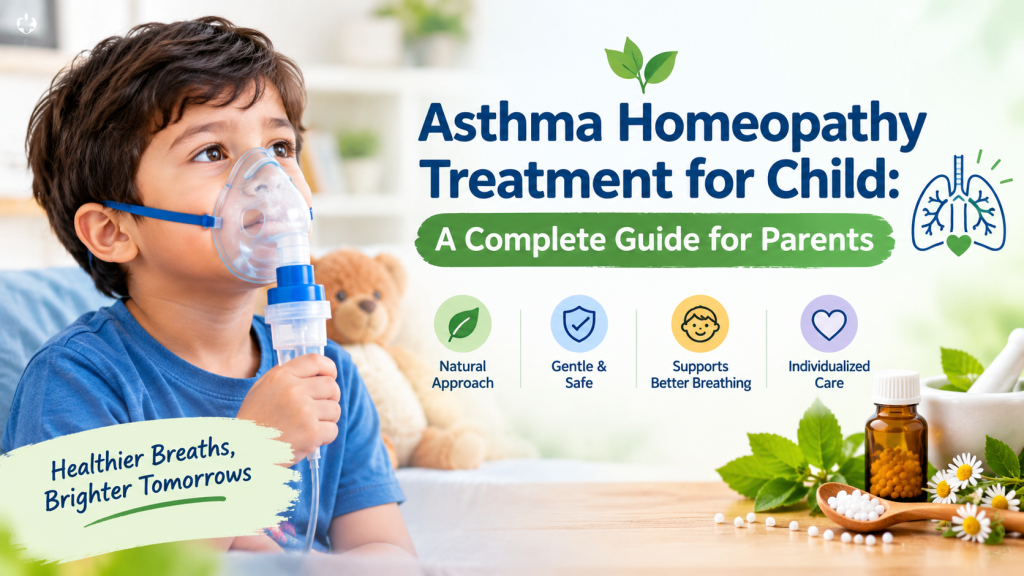
Watching your child struggle to breathe during an asthma flare-up is one of the most stressful experiences a parent can face. While conventional inhalers and medications remain the standard first-line treatment, many parents also explore asthma homeopathy treatment for child as a complementary approach to reduce flare-up frequency and support long-term respiratory health. This guide covers what you need to know before starting.
Understanding Childhood Asthma
Asthma in children happens when the airways become inflamed and narrow, making it harder to breathe. Common triggers include allergens (dust, pollen, pet dander), respiratory infections, cold air, and physical exertion. Symptoms typically include wheezing, persistent coughing (especially at night), shortness of breath, and chest tightness. Since children’s airways are smaller than adults’, even mild inflammation can cause noticeable breathing difficulty.
How to Treat Asthma in Children Naturally
Parents often ask how to treat asthma in children naturally, alongside or instead of conventional medication. Natural and supportive approaches include:
- Identifying and reducing triggers — dust mites, mold, pet dander, and strong odors are common culprits
- Maintaining good indoor air quality — regular cleaning, air purifiers, and avoiding smoke exposure
- Breathing exercises — age-appropriate techniques can help some children manage mild symptoms
- Diet and immunity support — a balanced diet can support overall respiratory health, though no specific food cures asthma
- Homeopathic treatment — many parents choose homeopathy for its gentle, individualized approach with minimal side effects
It’s important to note that “natural” approaches work best as a complement to proper medical management, not as a replacement during an active, severe asthma attack.
Best Homeopathic Treatment for Childhood Asthma
When people search for the best homeopathic treatment for childhood asthma, it’s worth understanding that homeopathy doesn’t use a single, universal remedy for all children with asthma. Instead, a qualified homeopathic doctor evaluates each child’s specific symptom pattern, triggers, and overall constitution before selecting an individualized remedy. Some commonly considered options in classical homeopathy for respiratory conditions include Arsenicum Album, Natrum Sulphuricum, and Ipecacuanha — though the right remedy depends entirely on the child’s specific case and should only be prescribed by a qualified practitioner, not self-administered.
Homeopathy for Allergic Asthma in Children
Homeopathy for allergic asthma in children focuses on addressing both the immediate symptoms and the underlying allergic tendency (often called “atopic constitution” in classical homeopathy). Since allergic asthma is frequently linked to conditions like eczema and allergic rhinitis, homeopathic treatment often takes a broader view of the child’s overall allergic profile rather than treating asthma in isolation. Parents considering this route should look for a homeopath experienced specifically in pediatric and allergic conditions.
What Is the Best Treatment for Child Asthma?
There’s no single answer to what is the best treatment for child asthma — it depends on severity, frequency of attacks, and individual response to treatment. For moderate to severe asthma, conventional treatment (inhalers, bronchodilators, and in some cases, inhaled corticosteroids) is the medically established standard of care, especially during acute attacks. Homeopathy is often used by parents as a complementary, long-term approach — particularly for mild to moderate cases, or to support a child between flare-ups — but should not replace emergency treatment during a severe asthma episode.
When to See a Doctor Immediately
Regardless of which treatment approach you’re following, seek emergency medical care if your child shows:
- Severe difficulty breathing or rapid breathing
- Blue tint to lips or face
- Inability to speak in full sentences due to breathlessness
- No improvement after using a rescue inhaler (if prescribed)
Choosing the Right Homeopathic Doctor for Your Child
If you’re considering homeopathy for your child’s asthma, look for a practitioner who:
- Has specific experience treating pediatric respiratory conditions
- Takes a detailed case history, including triggers, family history, and lifestyle factors
- Is transparent about realistic timelines and doesn’t promise an overnight cure
- Works collaboratively rather than telling you to stop conventional treatment abruptly
Frequently Asked Questions
How to treat asthma in children naturally?
Natural approaches include trigger identification and avoidance, improving indoor air quality, breathing exercises, and immunity support through diet. Homeopathy is also commonly used as a natural, individualized treatment option, ideally alongside guidance from a qualified practitioner.
What is the best homeopathic treatment for childhood asthma?
There’s no single best remedy — homeopathic treatment is individualized based on the child’s specific symptoms, triggers, and constitution. A qualified homeopathic doctor determines the right remedy after a detailed case evaluation.
Can homeopathy cure asthma permanently in children?
Asthma management outcomes vary by child. Some children see significant long-term improvement with consistent homeopathic treatment, particularly when triggers are also managed, but results are individual and shouldn’t be guaranteed by any treatment approach.
Is it safe to combine homeopathy with conventional asthma medication?
Many parents use both approaches together, but this should be done under medical guidance. Never stop a prescribed inhaler or medication abruptly without consulting your child’s doctor first.
At what age can homeopathic treatment be started for asthma?
Homeopathic remedies are generally considered gentle and can be used across age groups, including young children, when prescribed by a qualified homeopathic doctor familiar with pediatric dosing and case-taking.
How is allergic asthma different from regular asthma in children?
Allergic asthma is triggered specifically by allergens like dust, pollen, or pet dander, and is often linked with other allergic conditions like eczema or hay fever. Regular (non-allergic) asthma can be triggered by factors like exercise, cold air, or infections without an underlying allergic component.

