
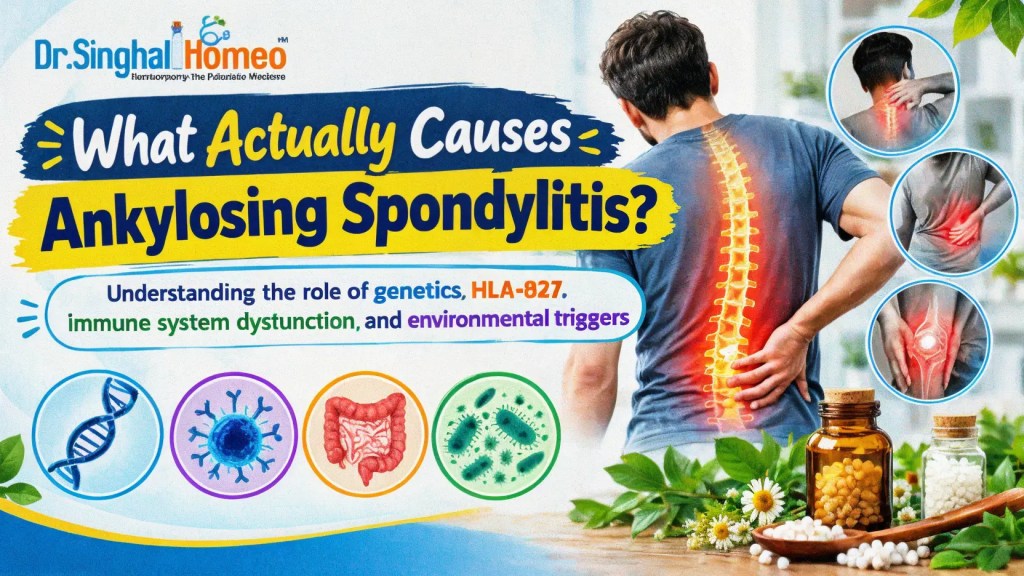
If you’ve been dealing with chronic back pain that just won’t go away — especially in the morning — you may have come across the term ankylosing spondylitis. It’s a long name for a condition that affects your spine and joints, causing inflammation that can, over time, lead to stiffness and even fusion of the vertebrae. But what actually triggers it? Understanding the causes of ankylosing spondylitis can help you make sense of your diagnosis and take better steps toward managing it.
The Role of Genetics
The biggest factor linked to ankylosing spondylitis is genetics. Most people diagnosed with this condition carry a gene called HLA-B27. This gene doesn’t guarantee you’ll develop the disease, but it does significantly raise your chances.
About 90% of people with ankylosing spondylitis test positive for the HLA-B27 gene — but not everyone with the gene develops the condition.
This tells us that genetics alone isn’t the full story. Something else needs to trigger the disease.
Family History Matters
If a close family member — like a parent or sibling — has ankylosing spondylitis, your risk goes up. This hereditary link further confirms how strongly genes play a role.
Environmental and Immune System Triggers
Researchers believe that certain environmental factors may activate the condition in people who are already genetically prone to it. These can include:
- Bacterial infections in the gut or urinary tract
- Changes in gut bacteria (the microbiome)
- Immune system misfires that cause the body to attack its own tissues
The immune system essentially goes into overdrive and starts attacking healthy joints and the spine, causing the inflammation that defines ankylosing spondylitis.
Who Is More Likely to Develop It?
While anyone can get ankylosing spondylitis, some patterns are worth noting:
- Age: Symptoms usually begin before the age of 45
- Sex: It’s more commonly diagnosed in men, though women can develop it too
- Ethnicity: It appears more frequently in certain populations, particularly those of European descent
Is It an Autoimmune Condition?
Yes — ankylosing spondylitis is considered an autoimmune and autoinflammatory disease. The immune system, rather than protecting the body, ends up causing damage to the spine and joints. This is why treatment often focuses on calming the immune response.
The Bottom Line
The causes of ankylosing spondylitis aren’t tied to just one thing. It’s a combination of:
- A genetic predisposition (especially the HLA-B27 gene)
- Immune system dysfunction
- Possible environmental triggers like infections
If you’re experiencing persistent back pain or stiffness, especially early in the morning, it’s worth talking to a doctor. Early diagnosis can make a real difference in how well the condition is managed over time. You don’t have to figure this out alone — the right medical support can go a long way.
Natural Healing Under Expert Guidance
For those looking for natural and holistic treatment, Dr. Vikas Singhal is one of the best Homeopathic doctors in India and abroad. He has been practicing at his Dr. Singhal Homeo Clinic in Chandigarh for 23 years of experience. He provides specialized care for ankylosing spondylitis and other chronic conditions affecting the joints and spine. Dr. Vikas Singhal focuses on personalized homeopathic treatment based on the individual’s symptoms and overall health, with the aim of supporting long-term management and improving quality of life. To get more details or make an appointment, reach out to us at +91 9056551747.
Frequently Asked Questions
Q1. Can ankylosing spondylitis be prevented?
There is no known way to prevent ankylosing spondylitis since it is largely driven by genetics. However, early diagnosis and treatment can help manage symptoms effectively.
Q2. Does having the HLA-B27 gene mean I will definitely get ankylosing spondylitis?
No, not at all. Many people carry the HLA-B27 gene and never develop ankylosing spondylitis. Other factors like environment and immune response also play a role.
Q3. Can stress cause ankylosing spondylitis?
Stress alone does not cause ankylosing spondylitis. However, stress may worsen existing symptoms or trigger flare-ups in people already diagnosed with the condition.
Q4. Is ankylosing spondylitis hereditary?
Yes, ankylosing spondylitis has a strong genetic component. If a parent or sibling has it, your risk of developing the condition is notably higher than average.

